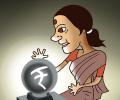
The All India Mobile Retailers Association (AIMRA) has announced a nationwide 'No UPI Day' protest on October 2 against the proposed 0.4 per cent Merchant Discount Rate (MDR) on UPI transactions exceeding Rs 2,000. Retailers argue that this charge will burden small businesses and impact their already thin profit margins, urging policymakers to withdraw the proposal.

Mobile phone retailers across India, represented by AIMRA, are protesting the 0.4% Merchant Discount Rate (MDR) on UPI transactions exceeding Rs 2,000 for merchants. They plan to observe 'No UPI Day' on October 2, 2026, arguing that this fee will significantly impact their income and burden small businesses, advocating for a continued Zero MDR structure for UPI merchant payments.

As many as 15,000-20,000 frontline retail jobs have reportedly been rationalised, with further cuts feared.

India's automobile retail sales saw a 23.8 per cent year-on-year decline in October to 31.72 lakh units, primarily due to the shift of major festivals like Dhanteras and Diwali to November this year, according to the Federation of Automobile Dealers Associations (FADA). Despite the overall dip, electric vehicle sales reached an all-time high, and commercial vehicles, three-wheelers, and tractors recorded their best-ever October sales.

The CBI has registered an FIR against Future Retail Ltd and its promoters, including Kishore Biyani, for an alleged bank fraud of Rs 904.32 crore. The case involves criminal conspiracy and diversion of funds from a consortium of nine banks, leading to searches at premises linked to Biyani in Mumbai.
The CBI has registered an FIR against Future Retail Ltd and its promoter Kishore Biyani, along with his brother Rakesh Biyani, in an alleged bank fraud case amounting to Rs 904.32 crore. The case stems from a complaint by SBI, alleging criminal conspiracy, cheating, and corruption. Searches were conducted at premises linked to Biyani in Mumbai on Friday. The company is accused of diverting funds sanctioned by a consortium of banks through associate companies, causing significant loss. A forensic audit revealed systematic financial irregularities and manipulation of accounts.

The Retailers Association of India (RAI) has voiced concerns that the government's new 0.4 per cent Merchant Discount Rate (MDR) on UPI transactions above Rs 2,000 could reverse the progress of digital payment adoption among small retailers. This fee, effective October 15, places the burden on merchants operating on thin margins, potentially pushing them back to cash transactions and undermining the government's formalisation agenda, especially ahead of the festive season.

India's upcoming wedding season, from November 21 to December 15, is projected to see 52 lakh marriages, generating an estimated Rs 7.5 lakh crore in business. This boom is expected to significantly impact various sectors including retail, hospitality, and jewellery, creating 1.25 crore temporary jobs.

Leading dairy companies in India have increased retail milk prices by Rs 4-8 per litre in the current fiscal year (FY27), an unusually steep rise attributed to surging procurement costs, constrained supplies, and elevated processing expenses, according to a CareEdge Ratings report.
India's automobile retail sales reached an unprecedented 24.23 lakh units in August, marking a 17.51 per cent year-on-year growth, with alternative fuels (CNG, hybrid, and electric) collectively surpassing petrol in the passenger vehicle segment for the first time.

Trade and business associations across India are organising a 'No UPI Day' on October 2 to protest the upcoming 0.4 per cent merchant discount rate (MDR) on Unified Payments Interface (UPI) transactions exceeding 2,000, effective from October 15.

India's domestic passenger vehicle dispatches surged by 12.4 per cent year-on-year in October, reaching a record 5.19 lakh units, while two-wheeler sales also saw a significant 16.1 per cent increase, driven by festive season preparations and improved demand.

An Indian School of Business professor highlights the lack of precise data on losses from free UPI transactions, arguing that the benefits, such as user data generation, are often overlooked in the debate over implementing a Merchant Discount Rate (MDR). A recent ISB survey suggests that charging MDR could lead street vendors to revert to cash, despite the government's allowance for MDR on transactions above Rs 2,000 and NPCI's deferral of its implementation.

The initial public offering (IPO) of auto components maker Hero Motors Ltd was fully subscribed on its first day of bidding, receiving bids for 1.38 times the shares on offer, with strong interest from retail investors.

Tata Motors is maintaining its lead over Mahindra & Mahindra in the race for the second position in India's passenger vehicle market, largely driven by its strong performance in electric vehicle sales. Both companies are aggressively expanding their SUV and EV portfolios and scaling up production to meet surging demand, indicating a fierce competition ahead.

Honda Motorcycle and Scooter India has maintained its position as the top-selling player in the retail two-wheeler market for the fourth consecutive month in October, intensifying its challenge to long-time leader Hero MotoCorp. This consistent performance, driven by strong scooter sales and shifting market dynamics, has significantly narrowed the gap between the two giants, with Honda now clearly establishing itself as a formidable contender for the market leader slot in the coming years.

Electric vehicle retail sales in India reached a new monthly record of 3,27,901 units in July, marking a 66 per cent increase over the previous year, with nearly one in eight vehicles retailed now being electric.

Delhi Police have arrested three Nigerian nationals and a Delhi resident in connection with an alleged drug trafficking operation. Authorities recovered 417 grams of MDMA and 105 grams of cocaine, with an estimated street value of Rs 1.5 crore. The foreign nationals were found to be overstaying their visas, and all four are facing charges under the NDPS Act.

Rural commercial vehicle (CV) registrations have consistently outpaced urban sales from April to July 2026, driven by a significant diversification of the rural economy and the positive impact of GST-led consumption, according to experts and data from Fada.

India's leading two-wheeler manufacturers, including TVS Motor, Bajaj Auto, and Hero MotoCorp, are preparing for a deceleration in growth during the second half of financial year 2026-27 (H2FY27). This anticipated slowdown is attributed to a high base effect from last year's GST rate cut, inconsistent rural demand, and a growing disparity between premium and entry-level segments.

Smallcap funds have emerged as the primary beneficiaries of the systematic investment plan (SIP) wave in Indian mutual funds over the past five years, with their SIP assets surging to approximately 1.83 trillion by March 2026, a fivefold increase.

'The last time a book brought so many readers to the stores was in 2007, for Harry Potter And The Deathly Hallows.'

The main culprit behind this cost escalation are rising prices of sugar and milk that go into making the sweets.

September marked India's highest-ever monthly EV retail volume. More than one in nine two-wheelers retailed in September was electric.

Automobile dealers in India are reporting healthy bookings ahead of Navratri and Dussehra, with the Federation of Automobile Dealers Associations (Fada) indicating strong confidence in a pickup in deliveries from mid-October, despite a high base from last year's GST-led surge.

Total automobile retail sales in India surged by 25.89 per cent year-on-year to 25,91,138 units in July, driven by GST rationalisation, ease of retail finance, and favourable festival timing, according to the Federation of Automobile Dealers Associations (FADA). This marks the first time all vehicle categories recorded their best-ever July sales.

A year after GST rates were rationalised, retail growth in automobiles has sustained beyond the initial festival surge, led by two-wheelers and passenger vehicles (PVs), with the Fada data showing rural markets emerging as a key driver of the post-GST demand recovery.

Petrol pump dealers seek exemption from the proposed 5 UPI charge on fuel purchases above 2,000, citing pressure on their margins.

Electric vehicle (EV) sales in India are growing faster than the industry's ability to produce and deliver them, leading to supply shortages at dealerships during the peak festival season. This surge in demand is attributed to rising conventional fuel prices, making EVs a more attractive option for cost-conscious buyers.

Anup Saha, currently a Wholetime Director at Kotak Mahindra Bank, has been appointed as the new Managing Director and Chief Executive Officer for a three-year term, effective January 1, 2027, with the Reserve Bank of India's approval.

As India's festive season approaches, passenger vehicle dealers are seeing a notable increase in inventories, yet discounts remain surprisingly moderate compared to previous years, signalling a tighter demand-supply balance in the automotive market.

India's apex drug regulator cautioned against antibiotic self-medication and their use for conditions where antibiotic treatment is not clinically indicated, particularly viral infections, the common cold and fever.

Fake web sites, counterfeit goods, bogus delivery charges and fraudulent customer support agents are common warning signs.
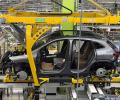
India's total automobile retail sales recorded a significant 9.55 per cent year-on-year growth in May, reaching an all-time high of 25,31,067 units, driven by strong performances in three-wheelers, passenger vehicles, and tractors, despite prevailing heatwave conditions and fuel price pressures.

koda Auto Volkswagen India is actively exploring various approaches to penetrate India's burgeoning electric vehicle (EV) market, including importing global models, local assembly, and developing highly localised products, as EV penetration is expected to reach 17-18% by the end of the decade.

The Reserve Bank of India's 25-basis point increase in the repo rate to 5.5 per cent is expected to exert pressure on housing affordability and buyer sentiment, particularly affecting interest rate-sensitive segments and potentially moderating sales during the crucial festival season.

Net SIP inflow is calculated by subtracting redemptions from gross SIP investments.

The central government has introduced a 0.4 per cent fee on UPI transactions exceeding Rs 2,000, prompting traders' associations to advocate for cash payments to avoid additional costs on digital payments. This move ends the zero-Merchant Discount Rate (MDR) regime, with traders expressing concerns about operating on tight margins and the potential for increased charges.

India's markets regulator Sebi has launched 'Demat 2.0', a pilot project for tokenisation of corporate bonds, enabling atomic settlement through integration with RBI's wholesale CBDC. This new market infrastructure uses Distributed Ledger Technology (DLT) to make bond issuance, trading, and settlement faster and more efficient. India is the first country to issue corporate bonds natively on a distributed ledger with central bank digital currency settlement. Additionally, RBI Governor announced new UPI innovations: 'Tap & Pay' for faster POS transactions and MyUPI, an AI-powered customer support solution.

'Every period of excessive optimism eventually gives way to a correction, while periods of extreme pessimism often create the best investment opportunities.'
